
Introduction
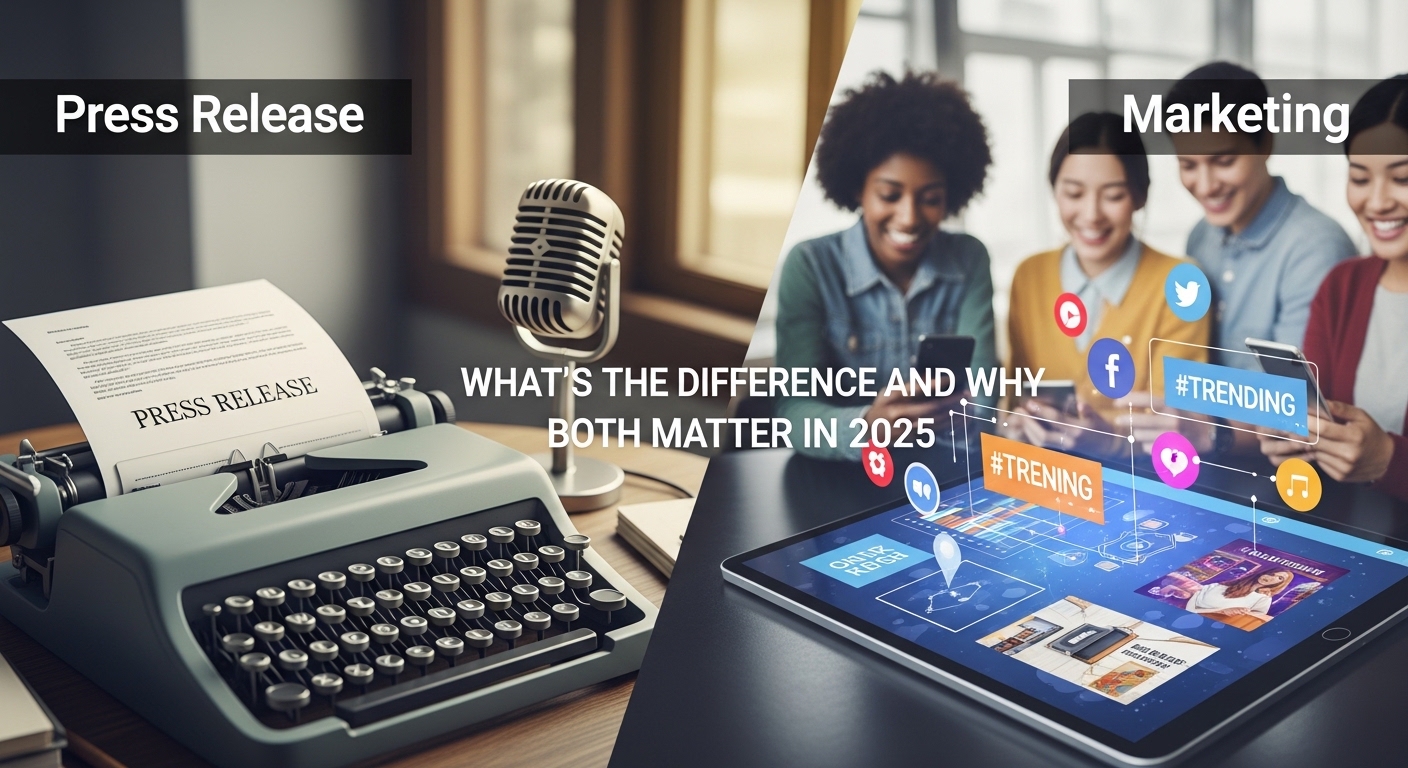
Every business wants three things: attention, credibility, and growth. To achieve this, companies rely on multiple communication tools. Two of the most commonly misunderstood are press releases and marketing.
They often get grouped together under the same label of “promotion,” yet they serve very different purposes. A press release is about credibility and public record. Marketing is about persuasion and performance. Confusing the two leads to weak messaging, lost trust, and missed opportunities.
In 2025, when consumers are more sceptical of advertising and media channels are more fragmented than ever, understanding this distinction is critical. Brands that know how to use press releases and marketing together gain authority, visibility, and measurable results. Those who do not struggle to stand out.
This guide explains the real difference between press releases and marketing, how each works, and why successful businesses use both as part of a single, integrated strategy.
What Is a Press Release?
A press release is an official, newsworthy announcement issued by a company to inform journalists, media outlets, investors, and the public about a significant development.
It follows a journalistic structure and focuses on facts rather than promotion. The goal is not to sell directly, but to inform and establish credibility.
Standard Press Release Structure
- Headline
- Dateline (city and date)
- Opening paragraph answering who, what, when, where, and why
- Supporting details and context
- Quotes from executives or stakeholders
- Boilerplate company description
- Media contact information
Common Uses of Press Releases
- Product launches and major updates
- Funding rounds, mergers, and acquisitions
- Leadership appointments and executive changes
- Strategic partnerships and collaborations
- Awards, certifications, and milestones
- Regulatory or compliance announcements
The primary value of a press release lies in earned media. When a trusted third party covers your news, it acts as independent validation. Coverage in respected outlets carries a level of trust that paid advertising cannot replicate.
In a digital environment where audiences actively avoid ads, this credibility matters more than ever.
What Is Marketing?
Marketing is a broad discipline focused on promoting products or services to attract customers, generate demand, and drive revenue.
Unlike press releases, marketing is fully brand-controlled and intentionally persuasive. It highlights benefits, solves customer problems, and encourages action.
Core Marketing Channels
- Paid advertising (search, display, social)
- Content marketing (blogs, guides, videos)
- Social media marketing
- Email marketing and automation
- Search engine optimisation (SEO)
- Influencer and creator partnerships
- Conversion rate optimisation and analytics
Marketing speaks directly to customers and prospects. Its success is measured through performance metrics such as traffic, engagement, leads, conversions, and return on investment.
Where press releases aim to build trust and authority, marketing focuses on growth and scale.
Key Differences Between Press Releases and Marketing
Purpose
Press releases exist to inform and establish credibility. Marketing exists to persuade and drive action.
Tone and Style
Press releases are factual, neutral, and objective. Marketing content is emotional, benefit-driven, and customer-focused.
Audience
Press releases target journalists, media outlets, analysts, investors, and stakeholders. Marketing targets customers and prospects.
Control
With press releases, media outlets decide how the story is framed and whether it is covered at all. Marketing gives brands full control over messaging, timing, and presentation.
Measurement
Press release success is measured through media coverage, reach, impressions, backlinks, and brand sentiment. Marketing success is measured through clicks, leads, conversions, sales, and ROI.
Format
Press releases follow a standard structure. Marketing uses a wide variety of formats, including ads, emails, landing pages, social posts, and long-form content.
These differences do not make one better than the other. They highlight why each exists and why replacing one with the other weakensthe overall strategy.
How Press Releases and Marketing Work Together
Press releases and marketing are most effective when they support each other.
A press release creates the story. Marketing amplifies that story and turns attention into action.
Example: Product Launch Strategy
- A press release announces the launch, explaining what the product is and why it matters.
- Media coverage builds awareness and third-party credibility
- Marketing campaigns amplify that coverage through ads, social posts, email sequences, and SEO content
- Landing pages and retargeting campaigns convert interest into leads and sales
The result is a balanced approach that combines trust with performance.
Without a press release, marketing can feel overly sales-focused. Without marketing, a press release often fades quickly without delivering a measurable business impact.
Why Both Matter More in 2025
The digital environment in 2025 is defined by content overload, declining trust in advertising, and increasing competition for attention.
Consumers research before they buy. They look for validation from credible sources. They want proof, not promises.
Press releases help establish legitimacy and authority. Marketing ensures that legitimacy reaches the right audience and drives results.
Companies that succeed understand:
- Press releases shape perception and narrative
- Marketing scales reach and drives conversions
Together, they create sustainable growth.
Common Mistakes Businesses Make
- Using press releases as sales copy
- Treating marketing as a substitute for credibility
- Ignoring SEO and long-term value in press releases
- Running paid campaigns without earned media support
- Keeping PR and marketing teams completely siloed
These mistakes weaken trust and reduce effectiveness.
Conclusion
Press releases and marketing serve different roles, but they work best together.
A press release informs, legitimises, and builds trust through third-party coverage. Marketing persuades, amplifies, and converts attention into measurable growth.
They are not interchangeable. They are complementary.
In 2025, the most effective brands understand how to balance both. They use press releases to shape the narrative and marketing to carry that narrative to the right audience and turn interest into action.
Mastering this balance is no longer optional. It is a competitive advantage.