
Every brand today is fighting the same battle: attention. Feeds refresh endlessly, ads blur together, and audiences are more sceptical than ever. When a company launches a new product, announces funding, or enters a partnership, one question always comes up:
Do we push ads immediately, or do we lead with a press announcement?
The real answer in 2026 is not “either-or.” It’s both.
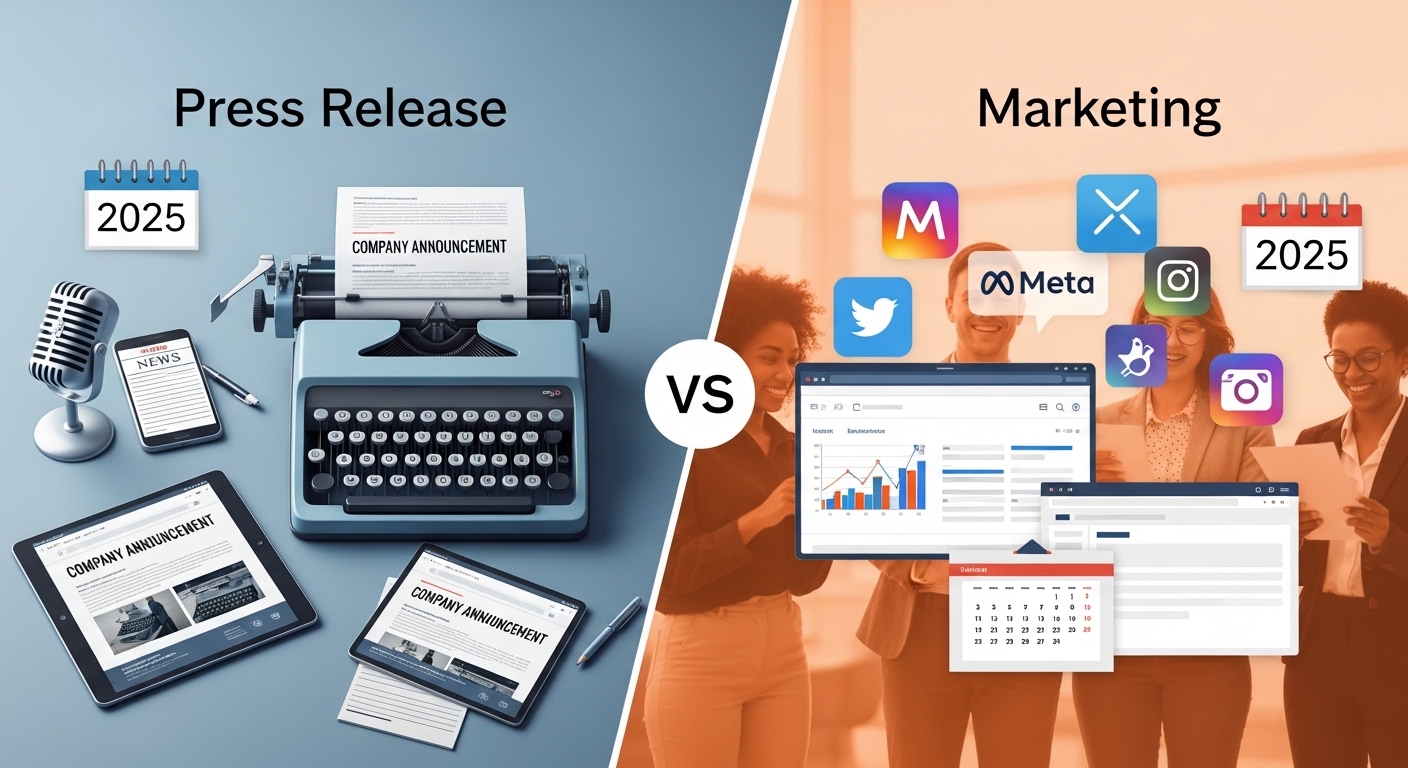
Press releases and marketing are often grouped under the same umbrella, but they serve very different purposes. One builds credibility. The other drives action. When used together, they create momentum that neither can achieve alone.
As we move deeper into a world shaped by AI-generated content, ad fatigue, and fragmented media consumption, understanding this distinction is no longer optional. It’s strategic.
This guide breaks down what press releases and marketing really are, how they differ, how they work together, and why brands that ignore either one are already falling behind.
What Is a Press Release in 2026?
A press release is a formal, factual announcement designed to communicate newsworthy information to media outlets, journalists, investors, and stakeholders.
Its purpose is not to sell directly. Its purpose is to inform, establish legitimacy, and earn attention through third-party validation.
At its core, a press release answers five questions clearly and quickly:
- Who is involved?
- What happened?
- When did it happen?
- Where did it happen?
- Why does it matter?
Modern Press Release Structure
While the structure remains familiar, execution has evolved:
- Headline: Clear, news-driven, not promotional
- Dateline: City and date
- Lead Paragraph: The core announcement in one or two sentences
- Body: Supporting details, quotes, context
- Boilerplate: Brief company overview
- Media Contact: Clear and accessible
What’s changed in 2026 is distribution and optimisation. Press releases are now written not just for journalists, but also for:
- Search engines
- News aggregators
- AI-powered discovery tools
- Industry databases
SEO-optimised press releases can rank for years, becoming evergreen credibility assets rather than one-day announcements.
When Press Releases Matter Most
Press releases are most effective for:
- Product launches
- Funding announcements
- Acquisitions and mergers
- Leadership changes
- Strategic partnerships
- Awards and milestones
- Regulatory or compliance updates
Their real value lies in earned media. Coverage from respected outlets carries trust that paid campaigns cannot buy. In an era where consumers increasingly distrust ads, this credibility gap matters more than ever.
What Is Marketing Today?
Marketing is the broader system responsible for driving awareness, engagement, and revenue.
Unlike press releases, marketing is not neutral. It is intentionally persuasive. It highlights benefits, frames value, and asks the audience to take action.
In 2026, marketing is deeply data-driven and increasingly AI-assisted.
Core Marketing Channels
Modern marketing includes:
- Paid advertising (search, social, display)
- Content marketing (blogs, videos, guides)
- Social media and community building
- Email marketing and automation
- SEO and performance content
- Influencer and creator partnerships
- Conversion optimisation and analytics
Marketing speaks directly to customers. It controls timing, messaging, and frequency. Success is measured in clicks, leads, conversions, and revenue.
Where press releases aim to inform the market, marketing aims to move the market.
Press Releases vs Marketing: The Real Differences
The confusion between PR and marketing usually comes from overlap in visibility, not function.
Here’s the clear distinction:
- Press releases build trust
- Marketing drives behaviour
Press releases are designed for credibility and long-term reputation. Marketing is designed for performance and scale.
Press releases are constrained by journalistic standards. Marketing is constrained by budgets and audience tolerance.
Both are essential. Neither replaces the other.
Why Integration Is Non-Negotiable in 2026
The biggest shift in recent years is not in tools, but in audience psychology.
Consumers now:
- Research before buying
- Verify claims through third-party sources
- Distrust overly polished ads
- Expect brands to stand for something real
This is where press releases and marketing reinforce each other.
A press release creates legitimacy. Marketing amplifies and converts that legitimacy into action.
Example: Product Launch Strategy
- Press release announces the product with facts, vision, and context
- Media coverage builds awareness and authority
- Marketing campaigns retarget readers and viewers
- Content marketing explains use cases and benefits
- Paid ads convert warm audiences
Without PR, marketing feels sales-heavy.
Without marketing, PR lacks momentum.
The Role of AI and SEO in This Relationship
AI has changed both fields, but in different ways.
For press releases:
- AI assists with drafting and structure
- SEO optimisation increases long-term discoverability
- Data analysis improves targeting of media outlets
For marketing:
- AI enables personalisation at scale
- Predictive analytics improve ROI
- Automated testing refines messaging continuously
The key is alignment. When PR messaging and marketing narratives contradict each other, audiences notice. When they reinforce each other, trust compounds.
Regional and Emerging Market Impact
In regions like South Asia and the Middle East, digital growth has reshaped how brands use PR and marketing.
Localised press releases, regional media partnerships, and language-specific announcements build credibility faster than global ad campaigns alone. When paired with mobile-first marketing strategies, brands often see significantly higher engagement and conversion rates.
This is especially relevant for startups and service-based businesses trying to compete with larger players.
Common Mistakes Brands Still Make
- Treating press releases as sales copy
- Publishing marketing claims without PR validation
- Running ads without any credibility layer
- Ignoring SEO in press releases
- Separating PR and marketing teams completely
In 2026, siloed strategies are a liability.
Conclusion
Press releases and marketing are not competing tools.
They are complementary forces. Press releases shape perception.
Marketing drives results. The most successful brands in 2026 understand that credibility fuels conversion, and conversion sustains credibility.
